Many eye-health supplements still rely on a familiar formula: lutein, zeaxanthin, and a simple promise that more antioxidants automatically means better vision support. That may sound reassuring, but buyers still need to ask whether the broader formula and the marketing story actually line up.
VisiFlora is marketed around the so-called gut-eye axis, which links gut health, inflammation, and eye comfort. That idea is interesting, but the product still needs to be judged on the label itself, the quality of the claims, and whether the promised benefits stay within realistic supplement territory.
What Exactly is VisiFlora?
VisiFlora is a 22-in-1 daily nutritional supplement designed to support macular health, improve night vision, and reduce eye fatigue. It is manufactured in a certified facility under USDA National Organic Program standards.
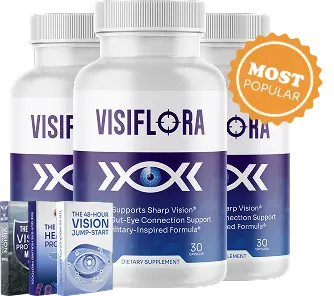
VisiFlora 3-bottle advanced package. Image from official website.
Rather than merely feeding the eye antioxidants, VisiFlora is split into four targeted complexes:
- Vision Defense Complex: Featuring NASA-researched Astaxanthin to sweep LPS toxins from the retina.
- Gut-Eye Barrier Complex: Grape Seed and Rutin to reinforce the blood-retinal barrier against circulating gut toxins.
- Vision Performance Boosters: Ginkgo Biloba to increase retinal blood flow by up to 23%.
- Macular & Lens Protection: The classic Lutein/Zeaxanthin "internal sunglasses" combined with Saffron for visual acuity.
The gut-eye angle may help explain why the brand positions VisiFlora differently from older eye formulas, but it should still be treated as a working theory rather than a guaranteed explanation for every vision complaint.
Lipopolysaccharides (LPS) are inflammatory toxins produced by bad gut bacteria. When the gut lining weakens with age, LPS is part of the brand's explanation for why gut health may overlap with eye comfort. It is a theory worth understanding, but it should not be treated as proof that one supplement can solve every vision complaint.
Ingredient Analysis: Inside the 22-in-1 Formula
With 22 ingredients, VisiFlora is incredibly dense. Let's break down the most impactful components across its four matrices:

Astaxanthin (Defense Complex)
A red algae pigment that is 6,000x stronger than Vitamin C. It easily crosses the blood-retinal barrier to neutralize LPS toxins directly on the retina, preventing cellular damage before it starts.

Grape Seed Extract (Gut-Eye Barrier)
Rich in proanthocyanidins, this acts as "gut armor," helping seal the intestinal lining to prevent further LPS toxins from leaking into the bloodstream and reaching your eyes.

Ginkgo Biloba (Performance)
A powerful vasodilator clinically shown to improve blood flow to the optic nerve by 23%. This ensures oxygen and other nutrients in VisiFlora actually reach the ocular tissues.

Lutein & Zeaxanthin (Macular)
Extracted from Marigold flowers, these are the only two carotenoids that accumulate in the macula. They act as "internal sunglasses," filtering out harmful high-energy blue light from screens.

Bilberry Extract (Lens Protection)
Famously used by British WWII pilots to improve night vision. Rich in anthocyanins, it strengthens retinal capillaries and helps the eye adapt faster to darkness.

Saffron Extract (Macular)
Recent clinical trials have shown that saffron significantly improves visual acuity (sharpness) and protects photoreceptor cells against degenerative stress.
A long ingredient list only helps if the product is actually usable in practice. The more sensible question is not just how many ingredients appear on the label, but whether the formula is coherent enough to justify the price and expectations.
A long ingredient list can look impressive, but it still needs to make sense as a product a normal buyer could use consistently and judge fairly over time.
How It Solves Vision Fatigue & Floaters
If you suffer from dry eyes, floaters, or end-of-day blurriness, generic vitamins won't fix the core issue. Here is the step-by-step mechanism VisiFlora uses:
Phase 1: Neutralizing the LPS Threat
Before fixing the eyes, the formula stops the damage. Grape Seed Extract and Quercetin support the gut barrier, while Astaxanthin and Vitamin C neutralize the circulating toxins that have already reached the optic nerve.
Phase 2: Flushing and Circulation
Ginkgo Biloba and Coleus Forskohlii dilate the microscopic blood vessels in the eye. This increased blood flow flushes out dead cells (which often appear as floaters) and delivers fresh oxygen.
Phase 3: Building the Blue Light Shield
Lutein and Zeaxanthin begin to accumulate in the macula. Because we stare at screens for 8+ hours a day, this internal pigment shield is essential to prevent digital eye strain and long-term macular deterioration.
Check the current VisiFlora offer carefully
Before buying, compare the current label, bundle pricing, and refund terms with the claims being made on the page.
Check the official offer60-day money-back guarantee.
How to Take VisiFlora for Maximum Absorption
Because VisiFlora contains fat-soluble ingredients, it makes sense to take it with food rather than on an empty stomach.
- Dosage: Take two (2) capsules daily.
- Timing: It is highly recommended to take both capsules together in the morning.
- Absorption Hack: Always take it with a meal containing healthy fats (like eggs, avocado, or a spoonful of peanut butter) to maximize the absorption of the fat-soluble carotenoids. Taking it with a meal is the more practical option.
The Result Timeline
Weeks 1-2: The Hydration Shift
Most users report that the "sandpaper" feeling of dry eyes begins to fade. As Taurine supports cellular hydration and the inflammatory LPS response is blunted, eyes feel less fatigued at the end of a long workday.
Weeks 3-5: The Clarity Phase
As Ginkgo improves circulation, visual acuity (sharpness) begins to edge upward. Users often report less needing to squint while watching TV or reading fine print. Night driving glare from oncoming headlights may become less piercing.
Months 2-3: The Structural Defense
This is the point where any longer-term support would be easier to judge. Eye-strain claims should still be read cautiously, especially if the underlying issue is already diagnosed or structurally driven.
VisiFlora is a supplement, not a treatment for cataracts, glaucoma, or other serious eye conditions. It is better viewed as optional nutritional support, not a replacement for eye care.
Side Effects & Safety
The formula is positioned as vegan, non-GMO, and stimulant-free. As with most supplements, tolerance can vary, so gentle-on-the-stomach claims should still be read as product positioning rather than a universal promise.
As with any supplement, if you are pregnant, nursing, or taking prescription blood thinners (due to the Ginkgo Biloba), consult your doctor first.
What we like
- Addresses the root cause: Gut-Eye toxicity (LPS)
- Massive 22-in-1 comprehensive profile
- Includes premium Saffron and Astaxanthin
- Gentle Zinc dosage avoids nausea
- 60-day money-back guarantee
- Free bonus ebooks (Vision exercises & eye diets) included with bulk orders
What to keep in mind
- Requires consistent daily use for 2-3 months for max results
- Premium pricing limits accessibility for some
- Can only be purchased through the official website
How credible does VisiFlora look?
A better question is whether the product looks credible enough for a cautious buyer to keep reading. That means checking the formula logic, the claims, the sourcing language, and whether the sales page overpromises.
Do the ingredients line up with the claims?
The strongest familiar anchors here are lutein and zeaxanthin, which are widely discussed in eye-health research. The broader formula may still appeal to buyers, but it should not be treated as proof that every added ingredient meaningfully changes outcomes.
Manufacturing and Transparency
VisiFlora is not white-labeled automatically from overseas. It is:
- Manufactured in the USA inside an FDA-registered, GMP-certified facility.
- Non-GMO, vegan-friendly, and free from common allergens.
- Covered by an unconditional 60-day money-back guarantee, allowing you to return even empty bottles if you do not experience the promised results.
The only legitimate source of VisiFlora is their official website. Be cautious of cheap listings on third-party marketplaces, as counterfeiters often sell expired or fake pills disguised under the same label.
Pricing & Bonuses
VisiFlora is available exclusively online. All 3 and 6 bottle orders come with 3 Free Digital Bonuses (Value $200): The Military Vision Protection Manual, The Gut-Eye Healing Guide, and The 48-Hour Vision Jump-Start.
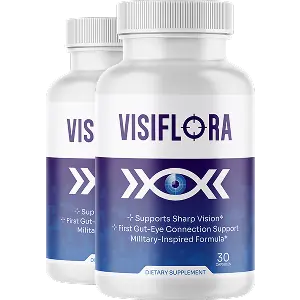
- Starter (2 Bottles): $79/bottle — Total $158 + Shipping
- Advanced (3 Bottles): $59/bottle — Total $177 + Free US Shipping + 3 Bonuses
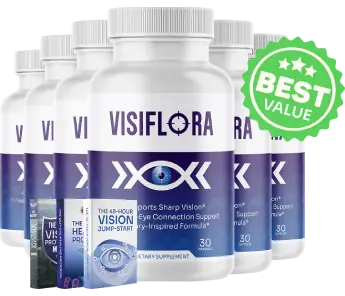
- Ultimate (6 Bottles): $49/bottle — Total $294 + Free US Shipping + 3 Bonuses (Best Value)
The Clear Winner
What Verified Users Are Saying
"My night vision was getting so bad I stopped driving after dark. After 6 weeks on VisiFlora, I'm driving at night again. My optometrist was genuinely surprised."
— Margaret S., Verified Buyer (Washington)"My optometrist was surprised at my last exam. The early signs of macular degeneration appear to have stabilized. I credit VisiFlora and the lifestyle changes I made alongside it."
— Barbara N., Verified Buyer (Virginia)*Testimonials reflect real user experiences. Results vary person-to-person.
Practical Tips for Vision Health
While VisiFlora provides comprehensive nutritional support, maintaining long-term eye health requires a proactive lifestyle. Consider adopting these habits:
- The 20-20-20 Rule: Every 20 minutes of screen time, look at something 20 feet away for at least 20 seconds to relax your eye muscles.
- Wear UV Protection: Always wear polarized sunglasses outdoors, even on cloudy days, to protect your macula from harmful UV rays.
- Manage Blood Sugar: High glucose levels can damage the delicate blood vessels in your retina. Limit processed sugars and refined carbs.
- Stay Hydrated: Adequate water intake is essential for maintaining tear production and preventing dry, irritated eyes.
Who Should Consider VisiFlora?
Better fit for:
- Adults over 40 noticing age-related blurry vision.
- Heavy digital device users experiencing daily eye strain.
- Individuals with frequent dry eyes or minor floaters.
- People looking to support their gut microbiome simultaneously.
Better fit for:
- Anyone seeking a replacement for prescribed glaucoma or cataract treatments.
- Pregnant or nursing mothers (without explicit medical approval).
- Individuals currently taking blood thinners (due to Ginkgo Biloba).
Our Final Verdict
🔗 Related Supplement Reviews
- MindBoost Review 2026 — Brain and cognitive health support
- NeuroSalt Review 2026 — Nerve health and neuropathy relief
- SonusZen Review 2026 — Tinnitus and hearing health
- PulmoBalance Review 2026 — Respiratory and lung health
VisiFlora looks more ambitious than many basic eye-support products, but that does not automatically make it the best option for every buyer. The more sensible takeaway is that it combines familiar eye-health ingredients with a broader marketing story, and that story should be read with measured expectations.
Best For:
- Individuals over 40 noticing age-related blurry vision
- People suffering from persistent dry eyes and floaters
- Office workers staring at screens for 8+ hours a day
- Anyone struggling with night driving glare
See the current VisiFlora pricing and bundles
If you are still considering it after reading the review, check the official pricing, bundle terms, and refund policy before spending money.
See current pricing and bundles60-day money-back guarantee.